Understanding ICHRA: A Flexible Health Benefit Solution for Small Businesses
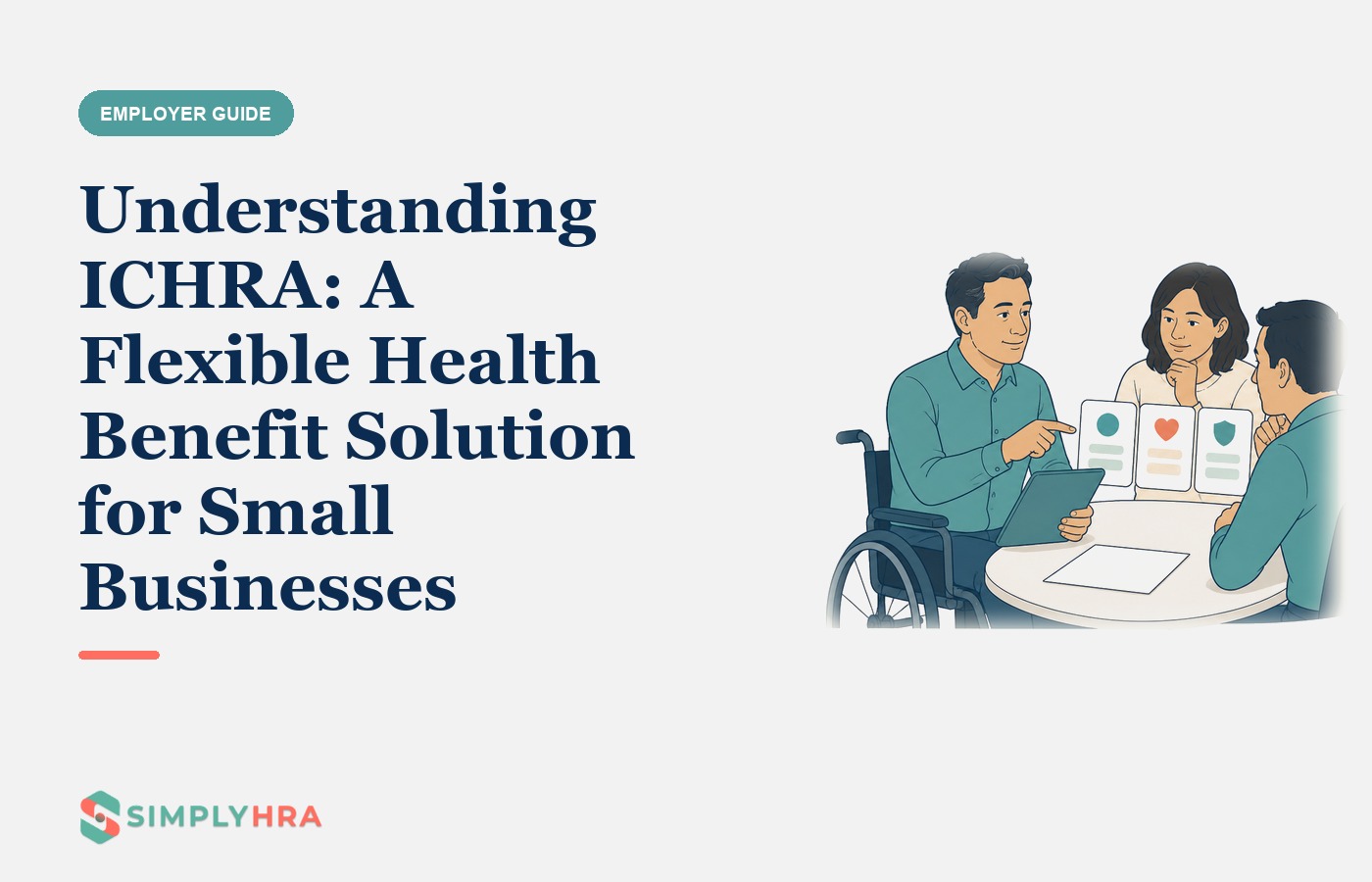
Navigating health benefits can be a headache, especially for small business owners. You want to offer great perks to attract and keep top talent, but the cost and complexity of traditional group health insurance are daunting. That's where the Individual Coverage Health Reimbursement Arrangement (ICHRA) comes into play. It's a flexible, affordable solution that lets you control your budget while giving employees the freedom to choose their own health plans.
CHOICE (Custom Health Option and Individual Care Expense) Arrangement is the current name for what was previously referred to as an ICHRA (Individual Coverage Health Reimbursement Arrangement). This page uses both terms.
But how exactly does ICHRA work? Is it the right choice for your small business? Let's break down everything you need to know about ICHRA and how it can simplify health benefits for both you and your team.
What Is ICHRA?
ICHRA stands for Individual Coverage Health Reimbursement Arrangement. It's a relatively new type of employer-funded health benefit that allows businesses to reimburse employees for individual health insurance premiums and other medical expenses, tax-free.
Here's how it works:
- You Set the Budget: As the employer, you decide how much money to contribute each month. There are no minimum or maximum limits.
- Employees Choose Their Plan:
- Simple Reimbursements: Employees pay their premiums and medical expenses, then submit proof for reimbursement up to the amount you set.
This flexibility makes ICHRA a game-changer for small businesses looking to offer health benefits without the complexity and cost of group health insurance.
Why ICHRA Is Perfect for Small Businesses
Small businesses often face tight budgets and a diverse workforce, making it hard to find a one-size-fits-all health plan. Here's why ICHRA is a great fit:
- Cost Control: You set the budget, so no surprise premium hikes.
- Tax Benefits: Contributions are tax-deductible for the employer and tax-free for employees.
- Employee Choice: Each employee picks the plan that suits their needs, boosting satisfaction.
- No Group Plan Hassles: You don't have to worry about renewing or managing a complicated group health plan.
SimplyHRA makes this even easier by handling the paperwork, ensuring compliance, and providing in-house enrollment support.
How ICHRA Works: Step-by-Step Guide
- Design Your Plan
- Choose which employees are eligible. You can separate groups by full-time, part-time, seasonal, or by location.
- Set your budget. Decide how much you want to reimburse each month.
- Communicate to Employees
- Inform employees about the ICHRA option and how they can use it to purchase individual health insurance.
- Employees Choose Their Coverage
- Employees shop for a plan that suits their needs. This can be through the Health Insurance Marketplace or private insurers.
- Reimburse Expenses
- Employees submit proof of expenses, like premium receipts or medical bills.
- You reimburse them up to the limit you set.
- Stay Compliant
- SimplyHRA keeps you compliant with federal rules, including reporting requirements.
Who Can Benefit from ICHRA?
ICHRA works well for:
- Small businesses wanting to offer competitive benefits without breaking the bank.
- Startups looking for flexibility as they grow.
- Companies with remote employees who need coverage across different states.
- Seasonal or part-time workers who require customized health benefit solutions.
It's a great alternative if your workforce is diverse, as employees can pick the plan that fits their unique needs.
ICHRA vs. Traditional Group Health Insurance
Curious how ICHRA stacks up against traditional group health plans? Here's a quick comparison:
ICHRA:
- Cost Control: Employer sets the budget, so no surprise premium hikes.
- Flexibility: Employees can choose their own plans, tailoring coverage to their needs.
- Tax Benefits: Contributions are tax-deductible for employers and tax-free for employees.
- Compliance: Must comply with ACA rules, but SimplyHRA makes it easy.
- Administration: Simplified setup and management with SimplyHRA: no ongoing headaches.
Traditional Group Health Plan:
- Cost Control: Costs can increase annually, impacting your budget.
- Flexibility: One-size-fits-all; limited plan options for employees.
- Tax Benefits: Tax-deductible for employers, but less flexibility for employees.
- Compliance: Must comply with ACA and state mandates, requiring more administrative work.
- Administration: Requires ongoing management and renewals, increasing HR workload.
ICHRA clearly offers more control and flexibility, making it an ideal choice for small businesses.
Why Choose SimplyHRA for Your ICHRA Needs?
At SimplyHRA, we understand that small businesses need health benefits that are flexible, affordable, and easy to manage. Our platform lets you set up an ICHRA plan in minutes, with in-house enrollment support to guide your employees every step of the way.
Here's why SimplyHRA stands out:
- Cost Control Without Surprises: You set the budget, no unexpected premium increases.
- Employee Choice: Your team can choose the plan that works best for them.
- Hassle-Free Compliance: We handle the paperwork so you don't have to.
- Affordable for Small Businesses: No expensive HR personnel needed: our software does the heavy lifting.
Ready to Offer Flexible Health Benefits?
ICHRA is a smart, flexible, and cost-effective way to offer health benefits that work for both you and your employees. If you're ready to simplify health benefits while giving your team the freedom to choose their own coverage, SimplyHRA is here to help.
Contact SimplyHRA today to learn more about our flexible ICHRA plans. Schedule a demo at https://simplyhra.com/schedule-a-demo or sign up for an employer account at https://app.simplyhra.com/employer-sign-up.
The Future of Small Business Health Benefits
With ICHRA, small businesses can now compete with larger companies by offering flexible, personalized health benefits. No more one-size-fits-all plans or skyrocketing premiums. By empowering your employees to choose their own coverage, you're not just offering a benefit. You're giving them peace of mind.
And with SimplyHRA, managing ICHRA has never been easier. Affordable, flexible, and 100% compliant, SimplyHRA lets you focus on growing your business, not on complicated health benefit administration.
Take the first step towards better benefits today. Schedule a demo or sign up now. Your employees, and your bottom line, will thank you.
Frequently Asked Questions (FAQs) about ICHRA:
Q: Can ICHRA be offered to different employee classes within the same company?
A: Yes. The ICHRA rule defines 11 permitted employee classes (such as full-time, part-time, seasonal, and employees in different rating areas), and employers may offer different terms to different classes. An employee’s family-coverage status is not itself a separate class. This flexibility allows small businesses to customize their benefits strategy according to their workforce's needs.
Q: Are there any participation requirements for offering ICHRA?
A: ICHRA has no overall minimum participation requirement, but federal minimum class-size rules apply when certain employee classes are offered in combination. Employers may offer ICHRA to as few or as many eligible employees as their permitted class structure allows.
Q: Can employees use ICHRA reimbursements for dental and vision expenses?
A: Yes, ICHRA can be designed to cover a wide range of qualifying medical expenses, including dental and vision insurance premiums. Employers have the flexibility to specify what expenses are eligible for reimbursement.
Q: Is there an option for unused ICHRA funds to roll over to the next year?
A: It depends on how the employer sets up the ICHRA. Employers can choose whether unused funds will roll over to the next year or if they will reset annually. This level of customization helps businesses manage their budgets more effectively.
Q: How does ICHRA impact employees' eligibility for premium tax credits?
A: Employees cannot claim Premium Tax Credits for months in which they are covered by an ICHRA or offered an affordable ICHRA. If the offer is unaffordable, an employee may qualify for a Premium Tax Credit only by opting out of the ICHRA and enrolling in Marketplace coverage, assuming all other eligibility requirements are met.
Q: What happens if an employee leaves the company mid-year?
A: Active-employee ICHRA coverage normally ends under the plan’s terms. However, if federal COBRA applies, termination of employment that causes a loss of ICHRA coverage may give the employee or another qualified beneficiary the right to continue the ICHRA, generally at their own expense. The individual insurance policy is separate and may continue if its premiums remain paid.
Q: Can an employer offer both ICHRA and a traditional group health plan?
A: Yes, but not to the same employee class. For example, a company could offer a traditional group health plan to full-time employees while offering ICHRA to part-time or remote employees. This strategy provides flexibility while maintaining cost control.
Q: How is ICHRA different from a Health Savings Account (HSA)?
A: An ICHRA is an employer-funded group health plan that reimburses eligible individual coverage premiums and, if the plan permits, other qualified medical expenses. An HSA is an individually owned account that may receive contributions from the employee, the employer, or others. HSA eligibility requires qualifying coverage and no disqualifying other coverage. An ICHRA can be designed to preserve HSA eligibility, such as by reimbursing premiums only or operating as a permitted limited-purpose or post-deductible HRA.
Q: What documentation is required for employees to receive ICHRA reimbursements?
A: Employees need to provide proof of coverage and proof of payment for eligible expenses. This typically includes insurance premium statements, receipts, or an explanation of benefits. SimplyHRA streamlines this process with an easy-to-use online platform that keeps records for compliance.
Q: Is ICHRA suitable for startups and growing companies?
A: Absolutely. ICHRA is particularly beneficial for startups and growing companies because it provides cost predictability and flexibility. As your team expands, you can easily adjust contribution levels or add new employee classes, making it a scalable solution for evolving businesses.
Related blogs
Prefunding ICHRA Accounts Best Practices: 2026 Guide
Defined Contribution Allowance: ICHRA Rules for 2026