Employee Reimbursement: Types & Tax Rules | 2026 Guide
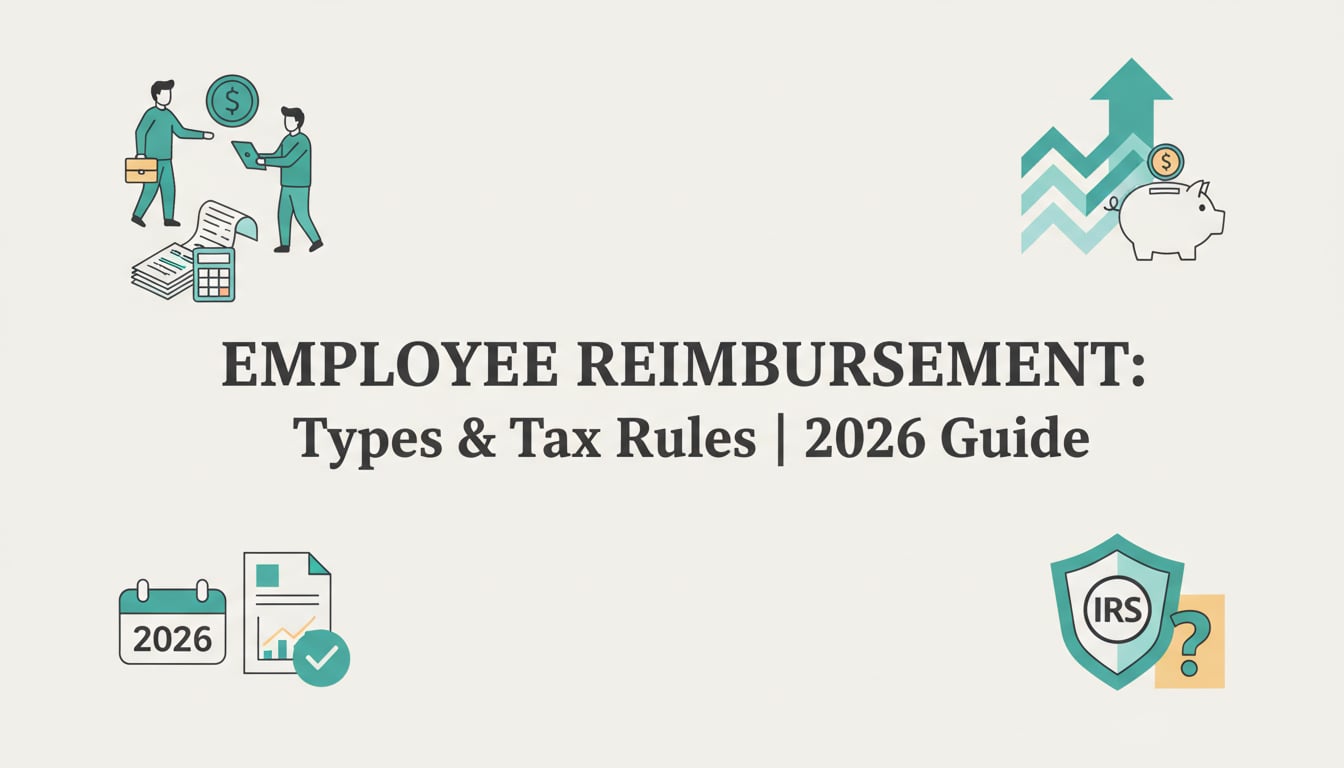
Reimbursement is the process of a company paying an employee back for work-related costs they covered with their own money, ensuring they aren’t financially burdened for doing their jobs. Understanding this world is key for any business owner, HR manager, or finance lead, as the concept touches everything from a simple business lunch to your company’s entire health benefits strategy. Getting reimbursement right keeps employees happy, ensures your books are clean, and can even save everyone a significant amount of money on taxes.
Let’s dive into the different types of reimbursement, breaking down what they are, how they work, and why they matter for your business.
The Basics of Business Expense Reimbursement
Common Types of Business Reimbursement
When an employee travels for a conference, takes a client to dinner, or buys office supplies, they expect to be paid back. This is where a formal reimbursement process comes in.
- Travel Reimbursement: This covers the typical costs of business travel. Think airfare, hotels, rental cars, and meals on the road. A clear travel policy is essential here, outlining what is and isn’t a covered expense.
- Auto Mileage Reimbursement: Instead of tracking gas receipts and oil changes, most companies reimburse employees for using their personal car for work based on a set rate per mile. This simplifies the process for everyone.
To manage these costs, companies often use standard rates set by the government.
- Standard Mileage Rate: The IRS sets an official rate each year (for 2024 it was 67 cents per mile, and for 2025 it was 70 cents per mile) meant to cover gas, maintenance, and depreciation. Reimbursing at or below this rate is a simple way to stay compliant.
- Per Diem Rate: Meaning “per day” in Latin, this is a fixed daily allowance for travel expenses, usually covering meals and incidental costs, and sometimes lodging. For example, instead of collecting every food receipt, a company might provide a $59 per day allowance for meals, a common standard rate in the U.S.
Making Reimbursement Tax-Free: The Accountable Plan
Here’s the most important part: a properly structured business expense reimbursement is not considered taxable income for the employee. For this to happen, the company must follow the IRS rules for an accountable plan.
An accountable plan has three simple rules:
- The expense must have a clear business connection.
- The employee must substantiate the expense in a timely manner (usually with receipts or a mileage log).
- The employee must return any excess reimbursement or allowance.
If a plan doesn’t meet these rules, any payments are considered wages and are subject to income and payroll taxes. A tax deductible business expense reimbursement under an accountable plan is the gold standard because the company gets a tax deduction, and the employee gets their money back tax free.
Good reimbursement management is the system a company uses to handle this whole process. A slow or confusing system can cause major headaches. In fact, one survey found that nearly half of workers globally don’t file expense reports for all the money they’re owed, creating stress and leaving cash on the table. Automating this process saves time and money, considering it can cost around $60 in administrative time to process a single manual expense report.
The Complex World of Healthcare Reimbursement
While business expenses are one side of the coin, healthcare reimbursement is a much larger and more complex area. This refers to how doctors, hospitals, and other providers get paid for their services, which is usually through an insurance company or government program, not the patient.
How Healthcare Payments Work
When you visit a doctor, a claim is sent to your insurer. The insurer then goes through claims processing to decide if the service is covered and how much they will pay based on negotiated rates or fee schedules.
This system isn’t always smooth. A reimbursement barrier is any obstacle that prevents a provider from getting paid fairly. For instance, if an insurer’s reimbursement rates are too low, a clinic might not be able to offer certain services or may even stop accepting that insurance altogether. This has been a major issue in telehealth, where physicians were slow to adopt virtual visits until reimbursement became standard.
Two different payment models often come into play:
- Capitation: In this model, providers are paid a fixed amount per patient per month, regardless of how many services that patient uses. This encourages preventive care and efficiency over volume.
- Balance Billing: This happens when a provider bills a patient for the difference between their charge and what insurance paid, typically with out of network services. The No Surprises Act has made this illegal in many emergency and unexpected situations, protecting patients from huge surprise bills.
Paying for Care: From Self Pay to Tax Advantaged Accounts
When insurance doesn’t cover the full cost, or if someone is uninsured, the patient is responsible.
- Self Pay: This means the patient pays for medical services directly out of pocket. While some providers offer discounts for paying in cash, self pay can lead to significant medical debt for patients.
- Medical Expense Reimbursement: This is when a patient gets paid back for out of pocket medical costs, either from their insurance company after filing a claim or through an employer sponsored benefit plan.
To help manage these costs, many people use tax advantaged accounts:
- Health Savings Account (HSA): An HSA is a personal savings account paired with a high deductible health plan. Contributions are tax deductible, the money grows tax free, and withdrawals for qualified medical expenses are also tax free. In 2026, an individual can contribute up to $4,500.
- Health Reimbursement Arrangement (HRA): An HRA is an employer funded benefit that reimburses employees tax free for medical expenses. Unlike an HSA, the HRA is owned by the employer, but it offers a powerful way for companies to contribute to employee healthcare costs with pre tax dollars.
Modernizing Health Benefits with HRAs
Health Reimbursement Arrangements have evolved significantly, offering flexible and powerful alternatives to traditional group health insurance. They allow employers to set a defined budget while giving employees the freedom to choose their own coverage—see how group insurance vs individual insurance compares.
Traditional vs. Modern HRAs
- Group Coverage HRA (GCHRA): Also known as an integrated HRA, this type is offered alongside a traditional group health plan. It’s used to reimburse employees for out of pocket costs like deductibles and copays, making a high deductible plan more affordable.
- Qualified Small Employer HRA (QSEHRA): Created for eligible employers that are not Applicable Large Employers and that do not offer a group health plan to any employees, a QSEHRA allows small employers to provide a tax-free reimbursement for health expenses, up to an annual government-set limit.
- Individual Coverage HRA (ICHRA): The most modern and flexible option, the ICHRA is a game changer. Available to businesses of any size, it allows employers to offer a tax free allowance with no contribution caps. Employees then purchase their own individual health insurance that best fits their needs. Employees who qualify should also understand how the advance premium tax credit (APTC) interacts with an ICHRA. An ICHRA can also satisfy the ACA employer mandate for Applicable Large Employers (ALEs).
An ICHRA gives employees true choice and portability, since they own their health plan. For employers, it provides predictable costs and removes the administrative burden of managing a group plan. When designed correctly, it can meet ACA affordability rules. Setting one up might sound complicated, but platforms exist to make it incredibly simple.
For example, SimplyHRA allows businesses to set up a compliant ICHRA in just a few minutes, defining different allowance amounts for different classes of employees (like full time vs. part time) and automating the entire reimbursement process. If you want to see how an ICHRA could work for your team, you can schedule a free demo to learn more.
Stipends: A Simple but Taxable Alternative
Instead of a formal reimbursement plan, some companies opt for stipends. An employee stipend is a fixed allowance given to employees for a specific purpose, like wellness, remote work, or health expenses.
- Health Stipend: This is a taxable monthly allowance given to employees to help with health insurance costs. While simple to administer, it’s treated as regular income. This means both the employee and employer pay payroll taxes on it, reducing the actual value of the benefit. A $300 stipend might only translate to around $220 in the employee’s pocket after taxes.
- Education Stipend: This is money provided to support professional development. Under Section 127 of the IRS code, employers can provide up to $5,250 per employee per year for educational assistance completely tax free, as long as it’s part of a qualified plan.
While stipends offer flexibility, their tax inefficiency often makes them a less powerful tool than a formal reimbursement arrangement like an HRA. Many companies start with a health stipend and eventually upgrade to an ICHRA to maximize the value of their benefit dollars. Converting a taxable stipend into a tax free reimbursement with a platform like SimplyHRA ensures every dollar goes directly toward the employee’s healthcare needs.
Frequently Asked Questions
1. What is the main difference between a health stipend and a Health Reimbursement Arrangement (HRA)?
A health stipend is a fixed, taxable allowance added to an employee’s paycheck. An HRA is an employer funded, tax free reimbursement for qualified medical expenses, including insurance premiums. An HRA is almost always more tax efficient for both the employer and the employee.
2. Is employee reimbursement considered taxable income?
No, as long as the reimbursement is made under an IRS compliant “accountable plan”. This requires the expense to have a business purpose, be properly documented with receipts, and for any excess allowance to be returned. Healthcare reimbursement through an HRA is also tax free.
3. Can any size business offer an Individual Coverage HRA (ICHRA)?
Yes. Unlike the QSEHRA, which is limited to eligible employers that are not Applicable Large Employers and do not offer a group health plan, an ICHRA can be offered by employers of any size, from a startup with two employees to a corporation with thousands.
4. What is the purpose of the IRS standard mileage rate?
The standard mileage rate simplifies auto mileage reimbursement. It provides a single, IRS approved cents per mile figure that represents the average cost of operating a vehicle for business, including gas, insurance, and wear and tear.
5. Why would a company choose an ICHRA over a traditional group health plan?
Companies choose an ICHRA to gain predictable, fixed health benefit costs and reduce administrative work. It also provides employees with the flexibility to choose their own individual health plan that best suits their needs and budget, which can improve satisfaction and retention. Discover how you can replace your group plan with a flexible ICHRA.
Related blogs

QSEHRA Plan: 2026 Rules, Limits, Eligibility & Taxes
1094-C vs 1095-C: ACA Employer Reporting Guide 2026